

A reconciliation spell is a ritual traditionally used to address conflict, resentment, emotional distance, or separation within an existing relationship, with the intention of encouraging forgiveness, communication, and the possibility of rebuilding the bond.
If you’re looking for a reconciliation spell, you’re usually not asking how to attract somebody new. Something already existed between you.
Maybe the last conversation ended badly. Maybe an apology came too late. Maybe neither of you stopped caring, but every attempt to talk somehow became another argument. Sometimes people are still together physically while the relationship itself feels miles apart.
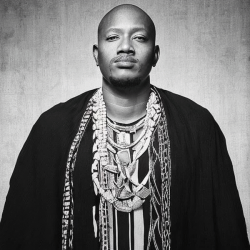
I’m Batha, a spell caster who works with relationship and reconciliation situations, and the reconciliation cases that stand out to me are rarely as simple as, “Make this person love me.” More often, the real sentence sounds closer to:
“We still love each other, but we can’t get past what happened.”
That difference matters.
Reconciliation also has a distinct place within documented folk-magic traditions. Hoodoo literature, for example, discusses returning, reconnecting, reuniting and reconciling as related but distinguishable relationship concerns rather than treating every form of love work as the same thing.
This guide follows that distinction all the way through.
The relationship already has a history. Reconciliation begins with what happened inside it.
Table of Contents
What Is a Reconciliation Spell?
A reconciliation spell is a form of relationship-focused spiritual work intended to help repair an existing bond after conflict, resentment, misunderstanding, betrayal, estrangement, or separation.

The word existing does a lot of work in that definition. Reconciliation requires history. There has to be something between two people that became damaged, interrupted, or difficult.
That is why reconciliation spell meaning is different from the meaning of general attraction work. Someone you’ve never dated or meaningfully connected with may be an attraction situation. Someone you loved, argued with, separated from, disappointed, forgave, married, or built a life with gives reconciliation something to work around: the relationship that already existed.
Documented hoodoo reconciliation material similarly places sorrow, hostility, estrangement and relationship healing at the center of the work. It is not simply another name for attracting a stranger.
I’ve dealt with situations where two people were technically still communicating, yet every conversation became another version of the original argument. They could discuss work. They could discuss the children. They could ask whether the other person had eaten.
Then somebody mentioned the relationship.
Within minutes, they were fighting again.
That is a very different problem from getting somebody to answer the phone. Communication exists. The damaged part is what happens inside that communication.
If you’re still determining whether your situation belongs to reconciliation, attraction, return work or another relationship intention, Essential Love Spells for Every Situation gives you the broader map.
Reconciliation isn’t about creating a history. It’s about deciding what can be done with the history you already share.
What Can a Reconciliation Spell Help Repair?
Reconciliation work is generally associated with relationships damaged by unresolved arguments, resentment, hurt feelings, broken trust, emotional distance, or separation rather than relationships in which no prior bond existed.
A fix a broken relationship spell can sound as though the entire relationship is one broken object. In reality, I’ve found that people usually arrive carrying one specific wound that has spread into everything else.
Sometimes it’s the argument that never actually ended. The couple resumed ordinary conversation, but the resentment remained underneath it.
Sometimes it’s the apology that came after the other person had already stopped trusting apologies.
Sometimes somebody stayed after betrayal but became suspicious of everything afterward.
And sometimes there was no dramatic ending at all. The relationship became quieter until both people were living inside the same silence.
Relationship research gives us a useful real-world parallel here. Attachment research describes betrayal or abandonment during a critical moment as capable of becoming a recurring obstacle that blocks relationship repair, while research on recovery after infidelity identifies talking, truth and trust among the central themes injured partners describe during recovery.
I’ve seen that distinction matter when somebody says, “We’re talking again, so why does everything still feel wrong?”
In one situation, contact had already returned after betrayal. The difficulty was that every late reply, unexplained absence and change in tone was now being measured against what had happened before. The old event was no longer happening, but it was still participating in the new relationship.
That’s why a reconcile love spell and genuine relationship repair eventually meet the same uncomfortable question:
What exactly still hurts?
You can restart a conversation while the original wound is still sitting at the table.
Reconciliation Is Not the Same as Bringing Someone Back
Reconciliation focuses on repairing conflict or emotional damage between two people, while return or ex-back work primarily focuses on restoring contact or bringing an absent partner back into the relationship.
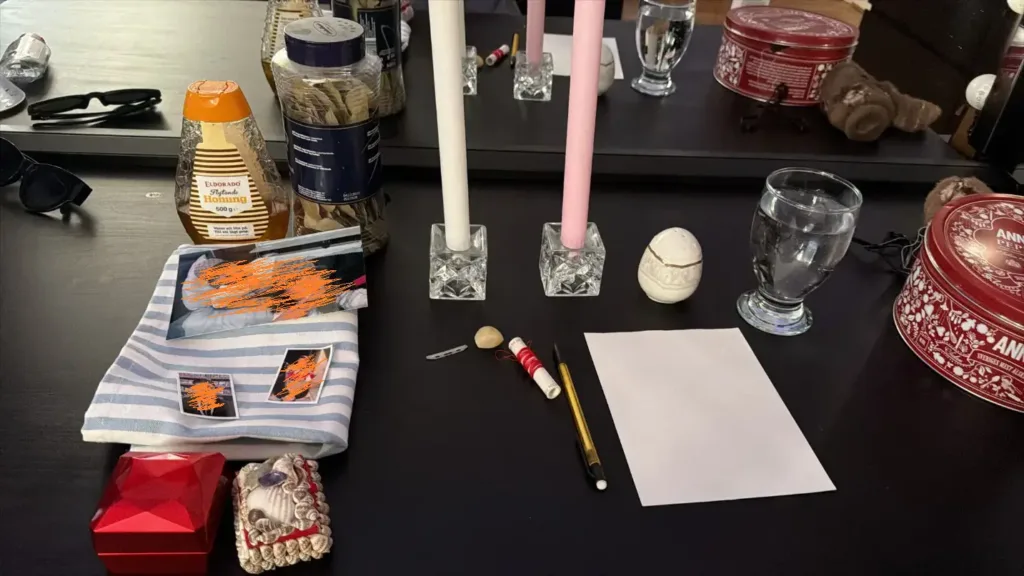
This distinction matters because two people can both say they want their relationship back while describing completely different problems.
A person saying “He disappeared and hasn’t spoken to me for two months” is describing absence.
A person saying “He’s back, but neither of us can forgive what happened” is describing damage.
Those situations may eventually overlap, but they don’t begin in the same place.
I’ve had people initially describe their goal as “bring him back.” Then the rest of the story comes out and he isn’t actually gone. They still see each other. They still exchange messages. Sometimes they’re still intimate.
What isn’t coming back is trust.
That changes the direction completely.
If your immediate problem is an absent former partner, Get Ex Back Spells maps the ex-back paths more directly. If communication itself has disappeared, Come Back To Me Spell deals specifically with reopening that door. If you remain together but keep repeating the same relationship pattern, Relationship Reset Spell has a different job again.
Traditional conjure literature itself uses language around returning, reconnecting, reuniting and reconciling, which is another reason not to flatten all four ideas into one generic “bring them back” page.
Sometimes the person needs to come back. Sometimes they’re already standing there, and what needs to come back is the relationship you could have with each other.
How Does Reconciliation Magic Work?
In folk-magic and witchcraft traditions, reconciliation rituals use symbolic actions, petitions, candles, herbs, sweetening elements, prayer, or focused intention to represent the softening of hostility and restoration of communication between people.
There is no single mechanism or ritual structure shared by every tradition.
Documented hoodoo reconciliation practices include prepared oils, powders, incense, candles and other forms of rootwork, while contemporary published spellcraft may use much simpler arrangements involving flowers, honey, petitions and candle work. The common theme is reconciliation; the ritual language used to express it can be very different.
That’s why I don’t like telling somebody that one missing ingredient automatically means they have performed reconciliation magic incorrectly.
I’ve had people become so focused on reproducing a ritual exactly that they could explain why they bought the candle, herb, oil and incense but couldn’t answer the question:
“What are you asking to become different between the two of you?”
The objects had taken over the story.
A useful reconciliation ritual does the opposite. The symbolism should make the relationship intention easier to understand.
If resentment is central, the work may represent softening resentment.
If neither person will acknowledge what happened, the intention may center on truth and accountability.
If every conversation becomes hostile, peaceful communication becomes more relevant than simply asking for more communication.
And spiritual symbolism does not remove the real-world half of that work. If a conversation becomes possible, somebody still has to have it.
The ritual can represent repair. It cannot do all the repairing while the relationship waits outside.
Reconciliation Spell Ingredients and What They Represent
Common reconciliation spell ingredients include candles, honey or other sweetening elements, flowers and herbs associated with affection or peace, written petitions, and symbolic representations of the people involved, although ingredients vary between magical traditions.
Reconciliation work can look more standardized online than it actually is. You may see one ritual using pink candles and another using purple. One includes honey. Another uses prepared reconciliation oil. One writer reaches for lavender and rose while another tradition works with completely different materia.
There is no single universal ingredient list for a reconciliation spell.
The useful question is what the ingredient represents within the method you’re actually following.

| Ingredient | Common symbolic use |
|---|---|
| Pink candle | Affection, emotional healing or reconciliation |
| Honey | Sweetening interactions or reducing bitterness |
| Rose | Love, affection or romantic connection |
| Lavender | Peace, calm or easing tension |
| Jasmine | Affection or emotional connection |
| Petition paper | Giving the reconciliation intention clear language |
| Personal representation | Symbolically representing the people involved |
Published examples show that variation clearly. Contemporary spellcraft can combine ingredients such as flowers, honey and candles, while hoodoo reconciliation traditions may use prepared spiritual supplies and different materia according to their own practice. That variation is evidence against treating one Pinterest ingredient list as a universal formula.
I’ve had someone arrive convinced they needed nearly twenty ingredients because they had combined several reconciliation recipes into one shopping list.
We went through the list one item at a time.
Some ingredients belonged to one tradition. Others came from a completely different ritual. A few had been added simply because another page called them “powerful.”
By the time everything unrelated had been removed, the work made much more sense.
A crowded altar can still hold a confused intention.
That’s the distinction worth remembering when you’re researching reconciliation herbs or reconciliation spell ingredients: more objects do not automatically create a more coherent ritual.
Easy Reconciliation Spell for Beginners
A simple reconciliation spell can be performed with a candle, a written intention and optional symbolic ingredients such as honey, rose or lavender, with the ritual focused on peace, forgiveness and reopening communication rather than controlling another person’s decision.
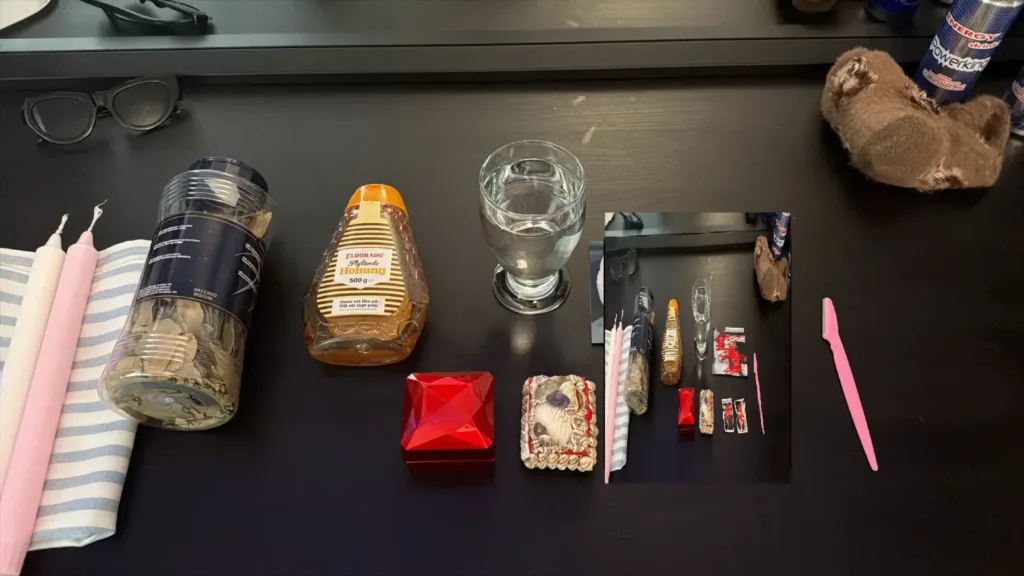
If you’re searching for an easy reconciliation spell, easy should describe the method, not the relationship.
A three-step ritual can be simple.
Forgiving betrayal may not be.
What You’ll Need
Use one pink or pale-purple candle, a piece of paper and pen, and optionally a small amount of rose or lavender kept safely away from the flame. Honey can be included symbolically if sweetening harsh communication fits the intention.
You don’t need to turn the table into a supply shop.
Step 1 — Decide What Actually Needs Repair
Before lighting anything, finish this sentence:
“If reconciliation began, the first thing that would need to change is…”
Try to make the answer specific.
“I want Alex back” names the desired person.
“I want the resentment between Alex and me to soften enough for an honest conversation about what happened” identifies the relationship condition.
That second sentence gives a spell for reconciliation something much clearer to represent.
I’ve had beginners worry about whether they were holding the candle correctly while remaining uncertain about what they were actually asking for. The ritual mechanics were getting more attention than the relationship itself.
Start with the relationship.
Step 2 — Write the Petition
Write both names on the paper, then write one concise reconciliation intention underneath.
For example:
May anger between us soften enough for honest communication, accountability and peaceful understanding to become possible.
Don’t write ten outcomes because you’re scared you’ll forget one.
You are not drafting the next twenty years of the relationship.
Step 3 — Prepare the Candle
Place the candle on a stable, fire-resistant holder.
If you’re incorporating symbolic herbs, keep loose dried material away from the wick and flame. You can place the petition safely beneath or beside the candle holder rather than creating a fire hazard for aesthetic effect.
Step 4 — Add the Reconciliation Symbols
If honey is part of your practice, let it represent sweetness replacing bitterness.
If rose is being used, let it represent the affection that remains.
If lavender is included, let it represent calm where communication has become heated.
Know why each item is there.
Otherwise, leave it out.
Step 5 — Light the Candle and Focus the Intention
Light the candle and read the petition slowly.
Then think about the repair, not only the reunion.
What would you need to admit?
What would you need to hear?
What would peaceful communication look like?
What would have to be different if the relationship resumed tomorrow?
This is where an easy reconciliation spell can become surprisingly uncomfortable, because focusing on reconciliation eventually forces the seeker to stop imagining only the other person’s change.
Step 6 — Close the Ritual
After a period of quiet focus, extinguish the candle safely if it cannot be supervised until completion.
Keep the petition somewhere private if that fits your practice.
Never leave a burning candle unattended, and don’t assume ordinary fire-safety rules disappear because the flame is being used spiritually.
Step 7 — Decide What Action Comes Next
This is the step most ritual instructions leave out.
If you’re currently respecting a no-contact boundary, the answer may be no action right now.
If communication already exists, perhaps there is an apology you have avoided.
Maybe you need to listen without defending yourself.
Maybe the next conversation shouldn’t be about immediately getting back together at all.
Published reconciliation practices can use fairly modest ritual structures; complexity is not what makes them reconciliation work. The central purpose is repair.
You can finish the candle ritual in one evening. The relationship may still have work waiting in the morning.
What Should You Ask for in a Reconciliation Spell?
A reconciliation intention is clearest when it describes the relationship condition being sought, such as peaceful communication, forgiveness, accountability or mutual understanding rather than demanding a specific action from the other person.
Compare these two intentions:
“Make her apologize and come back.”
and:
“May the hostility between us soften enough for honest communication, accountability and understanding to become possible.”
The second does something important.
It includes the relationship, not merely the other person’s behavior.
I’ve had somebody begin with one sentence:
“I want her back.”
When I asked what would actually have to change for getting her back to matter, the answer became:
“I want us to talk without blaming each other for everything.”
That’s much closer to reconciliation.
The distinction also fits what real relationship-repair work tells us. Research on forgiveness describes it not merely as wanting the conflict to disappear, but as a shift away from relationship-destructive responses toward more constructive ones.
This doesn’t mean you need therapy language in your petition.
It means you should know whether you’re asking for love, contact, forgiveness, truth, peace, accountability or all of those words because they sound reassuring.
“Bring us together” describes distance. “Help us deal differently with what tore us apart” describes reconciliation.
Do Reconciliation Spells Work?
There is no scientific evidence that reconciliation spells can compel another person to return or repair a relationship, although reconciliation rituals remain established practices within magical traditions and may be personally meaningful to practitioners.

That distinction is important enough not to soften.
Spiritual tradition can tell us that reconciliation rituals exist.
Historical sources can document what practitioners do.
People can report experiences they personally associate with spellwork.
None of those things establishes scientific proof that a ritual caused another person’s romantic decision.
So when people ask whether there are reconciliation spells that work, I separate spiritual belief from observable relationship outcomes.
If two people who were hostile begin having calmer conversations, something observable has changed.
If somebody offers a sincere apology, that’s observable.
If both people agree to try rebuilding the relationship, that’s observable.
What caused those events is a separate question.
That brings me back to the community case we looked at while rebuilding this page. One practitioner performed a love/reconciliation candle ritual expecting to reconnect with a longtime romantic interest. Their initial reaction to the candle led them to feel optimistic about the ritual.
The later update was more interesting.
The romantic reunion they wanted did not happen.
Instead, they said the process helped them feel more at peace with themselves, move beyond some of their self-blame, and reconcile internally with what had happened.
That’s not evidence that reconciliation spells cause psychological healing.
But it is an unusually useful reminder that the meaning somebody takes from a ritual can be different from the result they originally expected.
Scientific relationship research gives us evidence for a different part of this discussion. Forgiveness research has examined empathy and constructive responses in interpersonal repair, while studies of serious relational injuries describe recovery as a process rather than a single moment.
Sometimes the question “Did it work?” needs a second question: “What actually changed?”
A Reconciliation Spell Cannot Have the Conversation for You
Repairing a damaged relationship usually requires actions outside the ritual, including acknowledging what happened, communicating clearly, accepting responsibility where appropriate and deciding whether both people want to rebuild the relationship.
This may be the most important distinction on the entire page.
Contact is not reconciliation.
I’ve seen situations where communication resumed and both people initially treated that as though the difficult part was finished.
Then they had their first serious conversation.
Within minutes, both were defending themselves against the same accusation that had helped create the separation.
Nothing new had been built yet.
The silence had ended.
The conflict hadn’t.
Relationship-repair research supports why that distinction matters. Work on attachment injuries describes unresolved betrayal or abandonment as capable of repeatedly resurfacing and blocking repair, while studies of recovery after infidelity identify talking, truth and trust as meaningful parts of the recovery process.
The Gottman Institute similarly frames post-conflict repair around discussing what happened, validating each person’s experience, identifying triggers and taking ownership of one’s role rather than pretending the argument disappeared once the temperature came down.
This is where a fix a broken relationship spell reaches the boundary of what symbolism can accomplish.
The candle cannot admit you lied.
The petition cannot listen when your partner tells you how badly something hurt.
The honey cannot decide whether trust should be rebuilt.
Those parts belong to the people involved.
The ritual may give the relationship a language for repair. Eventually, the two people still have to speak it.
How Long Does a Reconciliation Spell Take to Work?
There is no reliable or scientifically established timetable for a reconciliation spell, and claims that a ritual will restore a relationship within a guaranteed number of hours or days should not be treated as factual.

One argument and a three-year separation aren’t the same problem.
Neither are a misunderstood text message and repeated betrayal.
Even outside spiritual practice, relationship repair is not measured by one universal clock. Recovery after significant relational injuries can involve multiple stages involving communication, truth, trust and changed behavior rather than one instant of “reconciliation.”
I’ve had people become anxious after only a few days because they expected something dramatic to happen immediately. Then the rest of the relationship comes into view: months of resentment, long periods of silence, previous reconciliations that failed, or trust that had been deteriorating for years.
The calendar cannot make those histories equivalent.
And that is why I would be particularly careful with phrases such as reconciliation spell that works immediately or “guaranteed reconciliation in three days.”
Fast contact can happen.
An apology can happen unexpectedly.
Two people can decide to speak tomorrow.
But none of that creates a scientifically defensible deadline for spellwork.
Time can tell you how long you’ve waited. It cannot guarantee when another person will be ready to repair what happened.
Signs Reconciliation May Be Developing
The clearest signs of relationship reconciliation are behavioral changes such as renewed communication, reduced hostility, accountability, willingness to discuss the conflict and consistent efforts to rebuild trust, rather than isolated coincidences.

This is where I separate something that feels meaningful from something that has changed between two people.
Dreaming about somebody may matter personally.
Seeing their name repeatedly may catch your attention.
A candle flame behaving unexpectedly may carry symbolic meaning within a person’s practice.
None of those things tells us, by itself, what another person has decided.
A sincere message does.
An apology is observable.
Agreeing to discuss what happened is observable.
Being able to disagree without immediately recreating the breakup is observable.
I’ve seen the first meaningful change be nothing more dramatic than:
“Can we talk?”
No declaration of eternal love.
No cinematic return.
Just somebody who had avoided the subject becoming willing to have the conversation.
That small sentence matters because relationship repair is often built through repair attempts rather than dramatic gestures. Gottman describes repair as the process through which couples recover from conflict and begin getting their interaction back on track.
For the wider question of spiritual signs rather than reconciliation behavior specifically, Signs a Love Spell Is Working deals with that search intent separately.
A coincidence can catch your attention. Reconciliation becomes much easier to recognize when two people’s behavior begins to change.
When Reconciliation May Not Be the Right Work
Reconciliation is not the right goal for every separation, particularly when there is no meaningful relationship to repair, the other person has clearly chosen not to reconnect, or restoring the relationship would recreate harmful patterns.
This is partly why identifying the actual relationship problem matters.
If you’ve never had an actual relationship with somebody, there may be no relationship to reconcile.
If the immediate problem is complete silence, communication or return work may describe the situation more accurately.
If you’re both still together and the problem is a repeating relationship pattern, resetting the dynamic may be more useful than “bringing” anybody anywhere.
I’ve also had reconciliation requests that became something else once the situation was explained. Someone might say they need to reconcile with a person they’ve admired from a distance but never dated.
That’s not reconciliation.
The word is being used for a desired relationship rather than a damaged existing one.
There’s a wider lesson in relationship science too: conflict and repair strategies are contextual. Even generally constructive strategies are not interchangeable across every kind of relationship problem.
So the strongest page about reconciliation magic shouldn’t claim reconciliation fits everybody.
It should help the wrong reader leave for the right page.
A good diagnosis doesn’t keep every visitor. It sends some of them to a different door.
Reconciliation Spell for an Avoidant Partner
When withdrawal or avoidant behavior is central to the conflict, reconciliation becomes more specific because increasing pressure for immediate closeness can sometimes deepen the communication gap.
Someone who withdraws during emotionally intense conversations creates a different reconciliation problem from somebody who is actively arguing with you.
I’ve seen the distinction when one person responds to silence by increasing contact—more calls, more messages, more requests for an explanation—while the other person responds to that pressure by withdrawing further.
Now both people feel ignored for opposite reasons.
Research and clinical relationship guidance also distinguish forms of emotional withdrawal such as stonewalling from ordinary disagreement; Gottman describes stonewalling as emotional shutdown that can occur when someone becomes overwhelmed during an interaction.
When that withdrawal pattern becomes the central problem, general reconciliation advice stops being specific enough.
If that withdrawal pattern is the defining feature of your relationship, Reconciliation Spell for Avoidant Partner takes the situation further.
Sometimes reconciliation needs less pursuit before it can create more connection.
Reconciliation Across Different Magical Traditions
There is no single universal reconciliation spell: witchcraft, folk magic, hoodoo and other spiritual traditions may use different ingredients, prayers, timing and ritual structures for relationship repair.
This is one of the distinctions I want readers to leave with because online spell content often collapses different traditions into a single ingredient list.
Hoodoo reconciliation work has its own history, terminology, spiritual supplies and methods. Contemporary witchcraft may use candles, petitions, herbs and symbolic intention in substantially different ways. One practice isn’t automatically a variation of the other simply because both use a candle.
Lucky Mojo’s documentation, for example, places reconciliation within a wider body of conjure work involving returning, reconnecting, reuniting, healing relationships and maintaining partnerships.
I’ve seen people collect pieces from several unrelated methods because every source presented its ingredient as indispensable.
A herb from one practice.
A moon phase from another.
A prayer from somewhere else.
An oil whose tradition they hadn’t investigated.
By the end, the ritual had more sources than it had coherence.
If you specifically want that tradition rather than a general reconciliation guide, Hoodoo Reconciliation Spells for a Lover keeps that work inside its own framework.
Borrowing a word like reconciliation doesn’t erase the tradition standing behind the method.
Frequently Asked Questions
What does a reconciliation spell do?
A reconciliation spell is intended to support healing, forgiveness, communication or renewed understanding within an existing damaged relationship. Its traditional purpose is reconciliation rather than creating attraction from nothing, and it cannot guarantee that another person will forgive, return or restart the relationship.
Can reconciliation spells fix a broken relationship?
Reconciliation spells may be used as spiritual practices around repairing a broken relationship, but the ritual cannot replace the actions required to rebuild it. If trust was damaged, communication, accountability, changed behavior and the willingness of both people to participate still matter.
Can reconciliation spells work after a breakup?
Reconciliation spells are commonly used after breakups when unresolved feelings or conflict remain, but a breakup does not guarantee reconciliation is possible. If the central problem is that your ex is completely absent rather than unresolved conflict, Get Ex Back Spells addresses that intent more directly.
What candle is used for reconciliation?
Pink, white and pale-purple candles appear in contemporary reconciliation practices, although candle correspondences vary by tradition. Pink is commonly associated with affection, while white may represent peace or clarity. The appropriate choice depends on the ritual system you’re following rather than one universal reconciliation rule.
What herbs are used for reconciliation?
Rose and lavender commonly appear in contemporary reconciliation work for affection and peace, while other traditions use different reconciliation herbs and spiritual materia. There is no universal herb list, so ingredients should be understood within the tradition or ritual being followed rather than combined indiscriminately.
Can I perform a reconciliation spell myself?
Yes, many reconciliation rituals are designed as personal spiritual practices and can be kept simple. A written petition and candle can be enough for a straightforward symbolic ritual. Performing it yourself does not guarantee a relationship outcome, and ordinary candle and fire safety still apply.
Is a reconciliation spell the same as a love spell?
A reconciliation spell belongs within the broader category of relationship or love magic, but its intent is narrower. General love spells may focus on attraction, commitment, self-love or other goals, while reconciliation work begins with an existing relationship that has become damaged or separated.
Can reconciliation happen without contact?
A ritual may be performed during no contact, but observable reconciliation requires some form of mutual relationship change eventually. Until communication, acknowledgment or another real-world interaction occurs, you cannot know from silence alone whether the other person wants reconciliation.
How long does reconciliation take?
There is no universal reconciliation timeline. Repair after a minor disagreement may look very different from rebuilding after betrayal, long separation or repeated conflict. Claims that a spell guarantees reconciliation within a fixed number of hours or days should not be treated as established fact.
Does a reconciliation spell force someone to return?
A reconciliation spell cannot be reliably shown to force another person to return or override their decisions. It is better understood as spiritual work centered on healing, communication and the possibility of reconnection while recognizing that another person’s participation cannot honestly be guaranteed.
Conclusion: Reconciliation Is About What Happens After the Hurt
Reconciliation is ultimately different from attraction or return work because its central question is not simply whether two people reconnect, but whether the conflict, resentment or broken trust between them can actually be repaired.
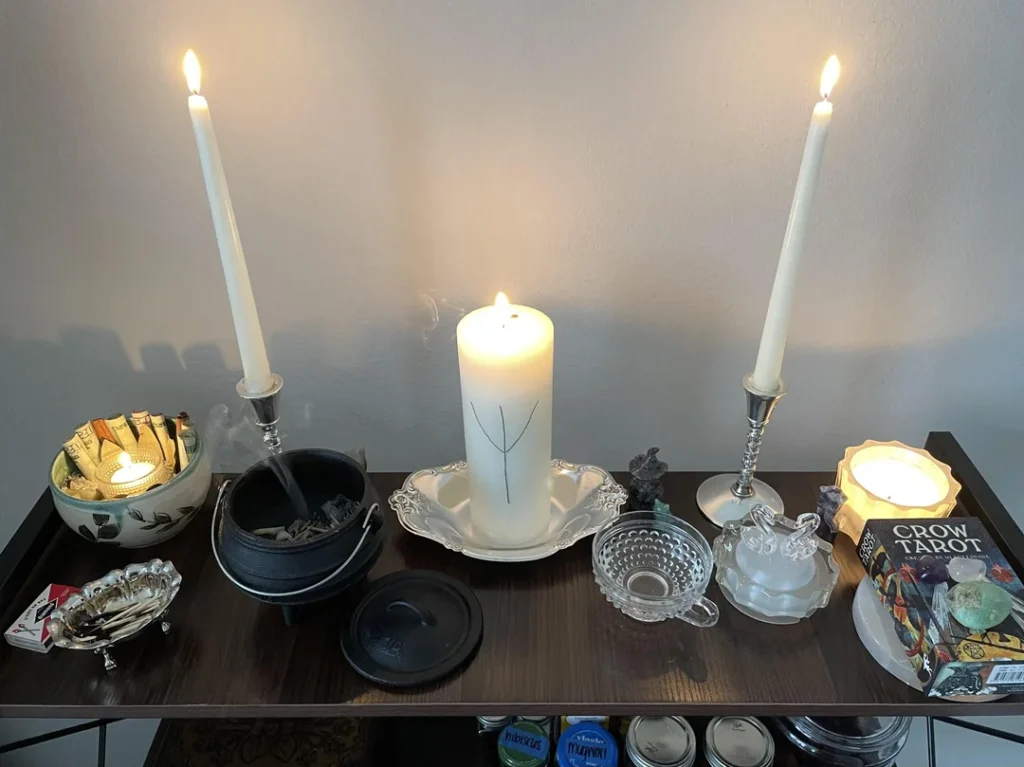
That’s why this story doesn’t end when the candle goes out.
Sometimes people reconnect.
Sometimes an apology finally arrives.
Sometimes the first calm conversation reveals that there is still something worth rebuilding.
And sometimes the conversation reveals that the relationship cannot become healthy merely by returning to what existed before.
The ritual can represent forgiveness. It can represent peace, communication, accountability, affection or another chance.
Then the people involved have to decide what those words will look like outside the ritual.
If reconciliation has already begun but the relationship needs a genuinely different starting point, Relationship Reset Spell is the next guide to read.
Reconciliation isn’t proven by getting two people back into the same room. The real story begins with what they are able to do differently once they’re there.
- Spell Caster in the USA: Finding Genuine, Experienced Spell Work - August 23, 2026
- Love Spells That Work: What Works for Different Relationship Situations - August 20, 2026
- Best Love Spells in Pretoria - August 17, 2026


there is always a way forward
how to bring back your ex